If you’ve ever driven by a sleek new warehouse, workshop, or even a modern home and thought, “That looks sharp — I wonder how it was built?”, chances are it was a metal building. Steel structures have exploded in popularity because they’re durable, cost-effective, and customizable for almost any use.
As licensed contractors and metal building dealers, we’ve guided plenty of homebuilders and investors through the process, and we’ve seen it all — the smooth projects that come together like clockwork, and the messy ones where poor planning cost thousands. To help you avoid the headaches, we’ve laid out the steps to building a metal building from start to finish.
This isn’t theory — these are the exact steps we use in the field.
Step 1 – Planning and Permits
Every successful project starts with a solid plan. Before you even break ground, you’ll want to think through:
- What’s the purpose of your building? Is it a workshop, a home, storage, or an investment property?
- Size and layout. Bigger isn’t always better — design for how you’ll use the space.
- Budget. Factor in not just the kit itself, but land prep, the foundation, and interior build-out.
One of the most overlooked parts of planning is permits and zoning laws. Local building departments can be strict, and each municipality has different rules. For example, some require engineered stamped drawings before you even apply for a permit. Also every metal building needs to have foundation plans. And here’s the catch most metal building dealers don’t include these! These can cost you thousands but we always include them in all our metal buildings.
📌 Pro tip: We once worked with a client who purchased their steel kit first, only to find out zoning wouldn’t allow that size on their lot. They had to downgrade their building which resulted in lost money. Always check codes and permit requirements first — it saves a lot of frustration later.
Step 2 – Site Preparation
Once you’ve got permits in hand, it’s time to prepare your site. This step sets the foundation (literally and figuratively) for your project.
Here’s what site prep typically includes:
- Clearing the land. Removing trees, brush, rocks, or existing structures.
- Grading. Leveling the site so water flows away from the foundation instead of pooling around it.
- Drainage planning. Installing culverts, ditches, or French drains if necessary.
- Soil testing. In areas with soft or unstable soil, testing ensures your slab won’t crack under pressure.
We’ve seen lots where the land looked flat to the naked eye, but when it rains, water collects like a pond right where the slab is supposed to go. Don’t underestimate drainage! If you catch it early you can build it right and never have to worry about it.
Step 3 – Laying the Foundation
The foundation is the single most important part of your building. If it’s wrong, everything else will be too.
Most metal buildings are built on a concrete slab foundation. Here’s how it typically works:
- Excavation and forming.
- Adding rebar or wire mesh for reinforcement.
- Pouring the concrete.
- Allowing time to cure properly (don’t rush this!).
Alternative foundations, like pier footings or perimeter walls, can work in some cases, but slabs are by far the most common. Depending on your load will determine the type of concrete slab foundation. If you’re not sure don’t hesitate to give us a shout.
⚠️ Common mistake we see: Builders try to cut costs with thinner slabs. For heavy-duty metal buildings, a slab that’s too thin or under-reinforced will crack quickly under stress. Spending a little more here pays off in longevity.
Step 4 – Framing and Erecting the Structure
Now comes the fun part — seeing your building take shape.
There are two main framing options:
- Cold-formed steel (lighter, cost-effective, good for smaller buildings).
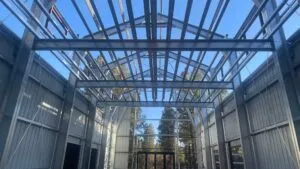
- Red-iron steel (PEMBs) (heavy-duty, great for larger spans and commercial projects).
The erection process usually follows this sequence:
- Setting anchor bolts and base rails.
- Installing vertical framing members.
- Adding roof trusses and purlins.
- Squaring and securing everything.
Safety is always a priority through the steps to building a metal building, especially during this step. Steel frames are heavy, and proper bracing is essential to keep everything stable until the structure is fully secured.
Step 5 – Adding Walls, Roof, and Insulation
Once the skeleton is up, it’s time to “skin” the building.
- Wall panels. Usually, steel sheets that get fastened directly to the frame.
- Roofing. Options range from single-slope roofs to classic gable styles.
- Insulation. This is where you save on energy costs. Spray foam offers great coverage, fiberglass is affordable, and rigid board provides solid performance.
Many DIY builders skip insulation at first to save money. In our experience, that’s a mistake. They try to use their shop year-round without insulation and spent more on heating and cooling than they save upfront. If you plan to use your building regularly, insulate from the start.
Step 6 – Doors, Windows, and Interior Build-Out
Your building is standing — now it’s time to make it functional.
- Doors. Roll-up garage doors, walk-through entry doors, or oversized industrial doors.
- Windows. Natural light not only saves energy but also makes the building more inviting.
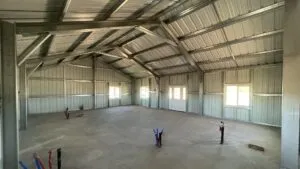
- Interior build-outs. This might include offices, bathrooms, storage mezzanines, or living space.
Don’t forget utilities at this stage. It’s much easier to run electrical and plumbing while the walls are open.
Step 7 – Final Inspections and Finishing Touches
Before you can officially call it complete, your building will need to pass inspections. Depending on your jurisdiction, inspectors may check:
- Structural soundness
- Electrical wiring
- Plumbing and HVAC
- Fire safety codes
After passing, you can add finishing touches like paint, gutters, landscaping, or interior décor.
Common Mistakes to Avoid
Over the years, we’ve seen numerous avoidable errors. Here are the top ones:
- Skipping thorough site prep.
- Underspending on the foundation.
- Forgetting about future expansion.
- Hiring contractors without metal building experience. This is big one!
Think of your metal building like a long-term investment — cutting corners early usually costs more in repairs later.
Cost Considerations and Timeline
So, how much and how long?
- Costs. Will depend on size but final costs depend on customization, location, and labor. Foundations, insulation, and interior build-outs add significantly. Get a FREE quote on your metal building by using our 3D Designer Tool.
- Timeline. A small building might go up in 6–8 weeks, while larger, more complex projects could take several months. Prefabricated kits can significantly shorten build time.
According to the Metal Building Manufacturers Association (MBMA), steel buildings often cost 30% less to build compared to traditional structures, with faster construction timelines (MBMA, 2023).
Conclusion
The steps to building a metal building may sound intimidating at first, but when broken down, the process is manageable and rewarding. From planning and permits to site prep, foundations, framing, and finishing touches, each stage builds on the last. However, we will always recommend hiring a professional to ensure it is done correctly.
We’ve seen firsthand how following these steps prevents costly mistakes and creates buildings that stand strong for decades.
If you’re considering a project of your own, don’t go it alone — the right team can save you time, money, and stress. Contact us today for a FREE consultation, and let’s get your building off the ground the right way.
References:
Metal Building Manufacturers Association. Why Metal Buildings. MBMA, 2023. https://www.mbma.com